
Home / Technology
We deliver the heat. Never the flame.
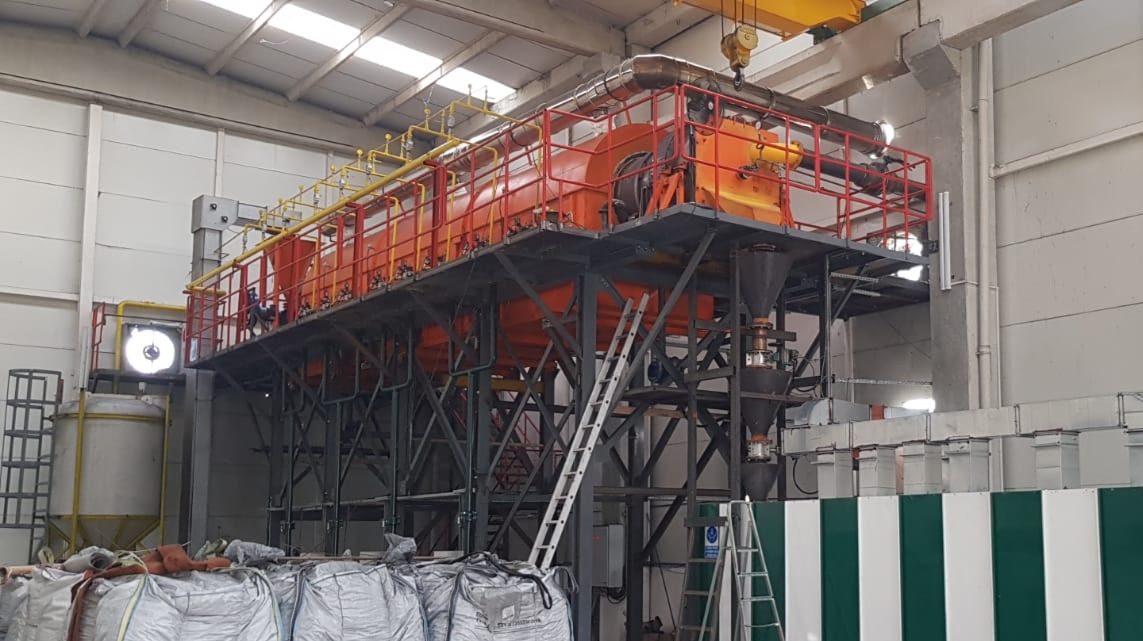
The quality of activated carbon is determined inside the kiln. Our indirect-heating stainless steel kiln, developed with German technology, is a first in Türkiye.
Two kilns, two worlds
The difference between direct firing and indirect heating
In traditional production — especially at facilities in Asia — the flame, combustion gases and product share the same brick chamber. In our system, a specialized stainless steel kiln is heated from the outside; the product is processed in a sealed vessel, completely isolated from the outside environment.
- ✕ Flame and combustion gases (CO, NOₓ, SO₂) share the chamber with the product
- ✕ Alumina, silica, calcium and trace elements leach from the brick lining into the product
- ✕ Uncontrolled environment — quality varies batch to batch
- ✓ Heat is conducted to the product through the stainless steel wall — flame-free
- ✓ No brick: the source of mineral contamination is eliminated at the root
- ✓ Controlled atmosphere → homogeneous, repeatable quality
"Production takes place in a sealed vessel, fully isolated from the outside environment — as pure as food cooked in a pot." Akarbon production approach · indirect heating
Why it matters
Three differences, one result: pure activated carbon.
No combustion-gas contact
In direct firing, CO, NOₓ and SO₂ work their way into the product. In our system the flame stays on the outer wall; the product never meets these gases.
No mineral contamination
Brick-lined kilns release alumina, silica, calcium and trace elements into the product over time. In a stainless steel body, that source simply doesn't exist.
Homogeneous quality
A sealed, controlled atmosphere eliminates temperature fluctuations. Every batch comes out with the same properties as the last.
From shell to activated carbon
Production in five steps
Hazelnut shell
Intake and preparation of 100% domestic raw material. We create value from Türkiye's annual 300,000–400,000 tons of shell waste.
Carbonization
Reducing the shell to a carbon skeleton through controlled thermal conversion.
Thermal activation
Opening the pore structure in the indirect-heating stainless steel kiln — flame-free.
Sizing
Bringing it to granular (0–10 mm) or powder (<150 µm) form according to the application.
Laboratory
Testing every batch to ASTM standards in our own laboratory.
Let us walk you through the technology on-site.
We respond to your questions within 2 hours.