Transport channels
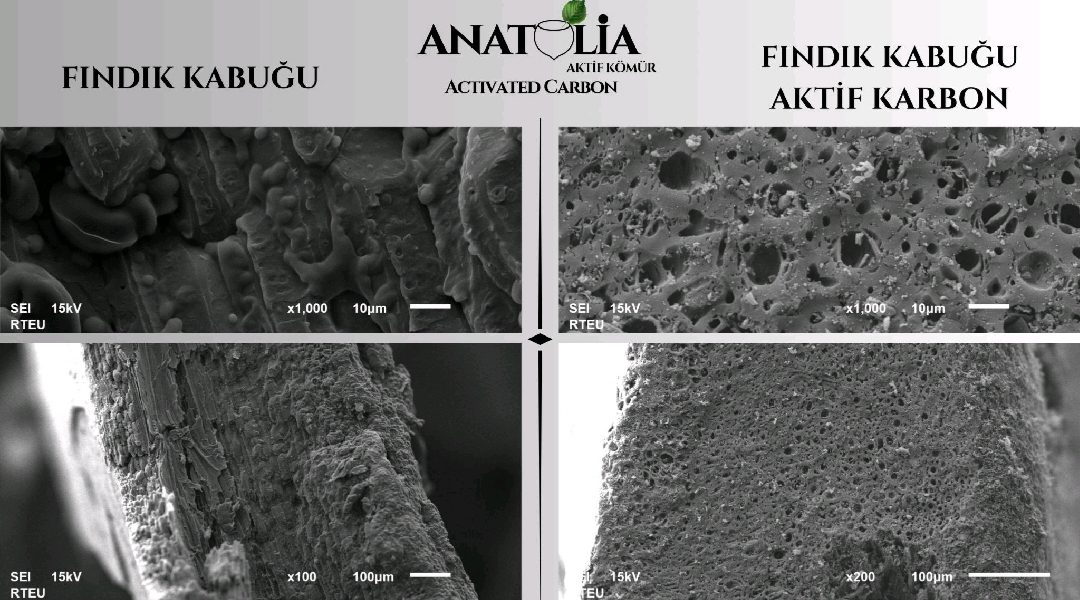
The widest pores opening at the granule surface. Water or gas carries pollutants into the inner structure through these broad pathways — gateways to the adsorption sites deep within.
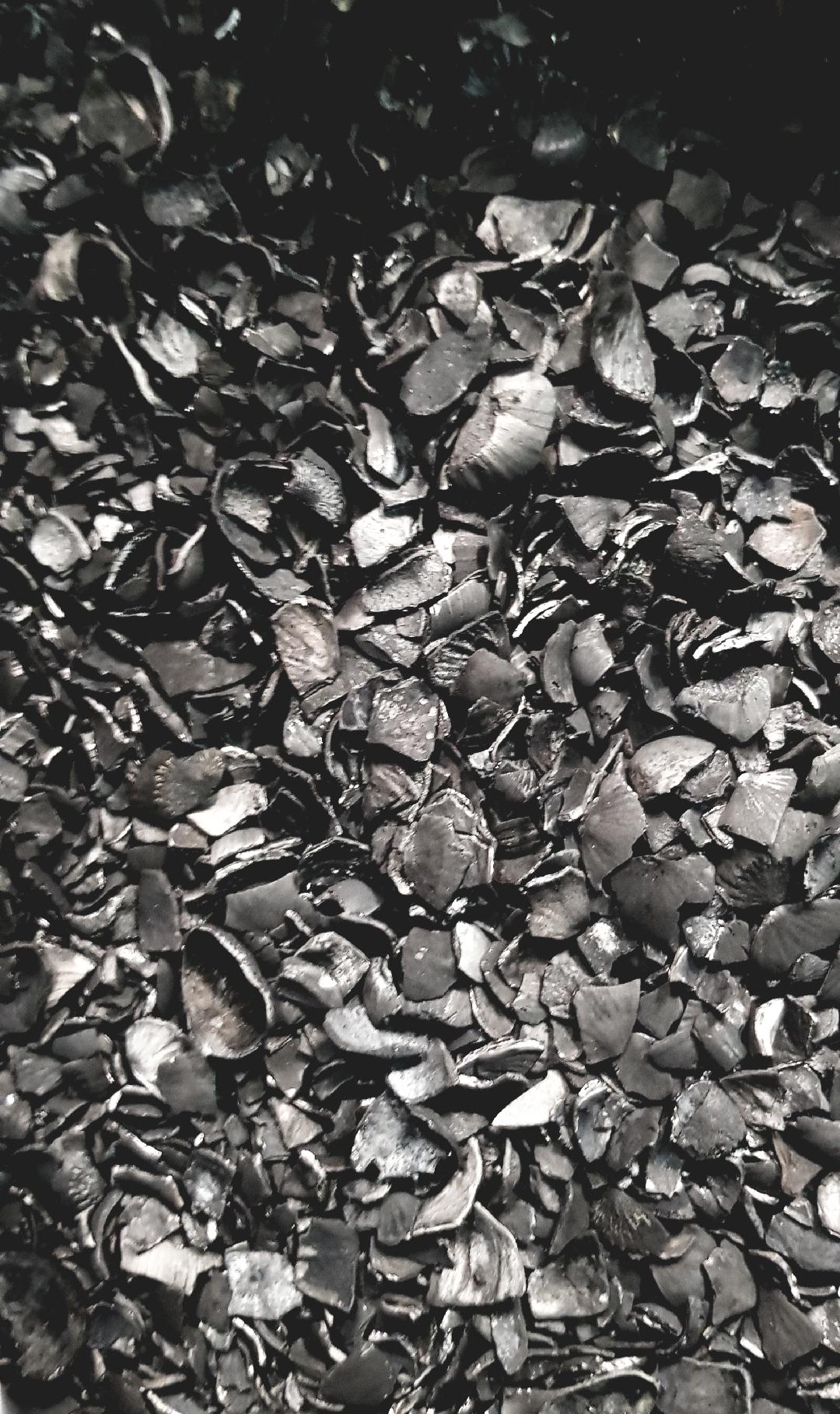
The architecture of a hazelnut shell: from millimeter to nanometer, every pore has a purpose. Scroll down — let's descend into the granule together.
The widest pores opening at the granule surface. Water or gas carries pollutants into the inner structure through these broad pathways — gateways to the adsorption sites deep within.
Mid-scale voids branching within the pore walls. Large molecules like methylene blue are captured here — methylene blue adsorption is the standard indicator of mesopore capacity.
Sub-nanometer voids in the activated carbon matrix. Small molecules like iodine are caught here by van der Waals forces — the iodine number is the classic measure of micropore capacity. Most of the hundreds of square meters of internal surface per gram lie in this region.
This pore architecture is no accident — it's built inside the kiln.
Explore the technologyIndirect Heating Technology
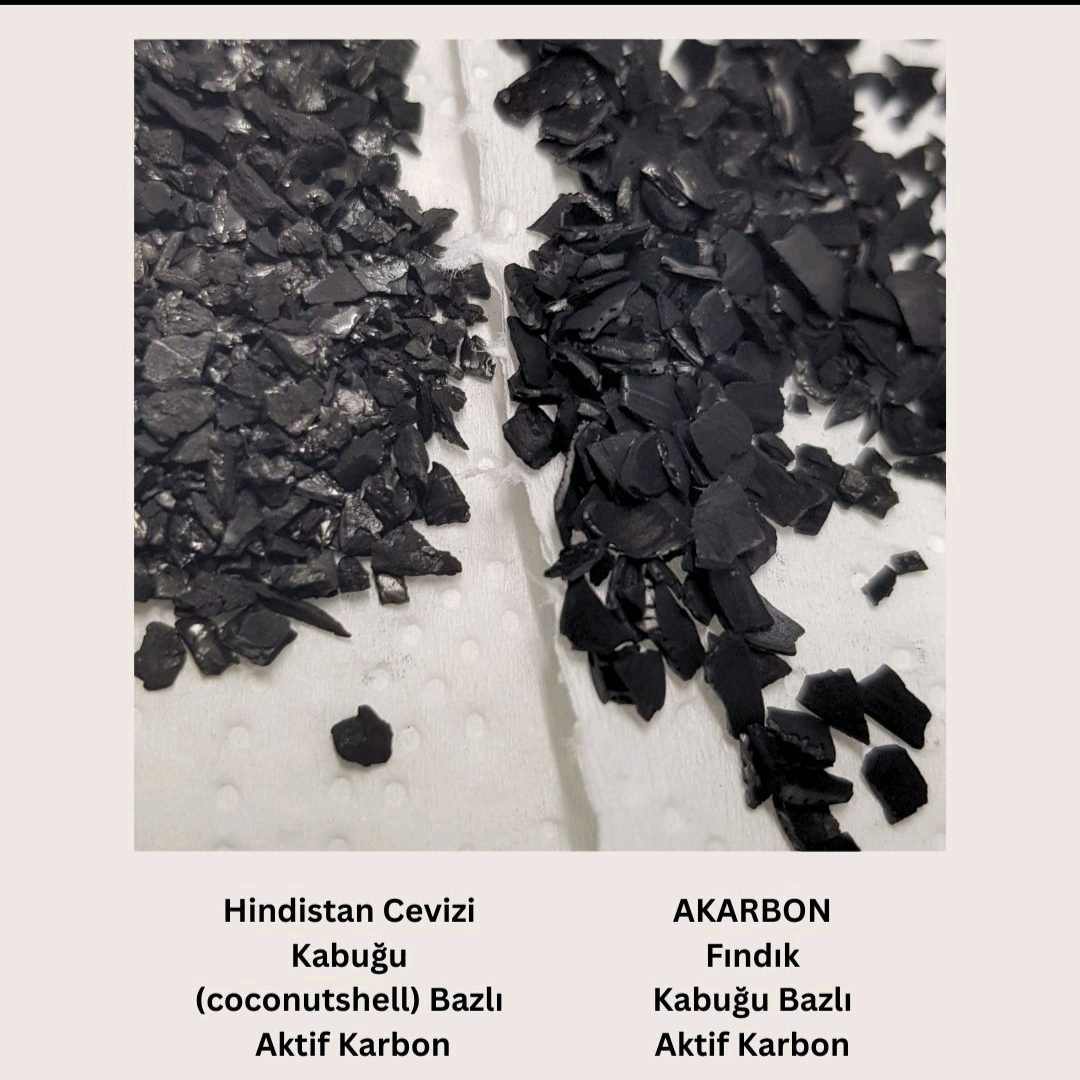
Most competitors — especially producers in Asia — make activated carbon in direct-fired brick kilns. Akarbon heats its specialized stainless steel kiln from the outside, using German technology. The difference shows in the product.
"Production takes place in a sealed vessel, fully isolated from the outside environment — as pure as food cooked in a pot." Akarbon production approach · indirect heating
Products
The same patented hazelnut-shell activated carbon — in granular or powder form, depending on your application.
Granular
Produced in the 0–10 mm range, sizeable to your requirement with our crusher. Drinking water treatment, air purification and odor removal.
Powder
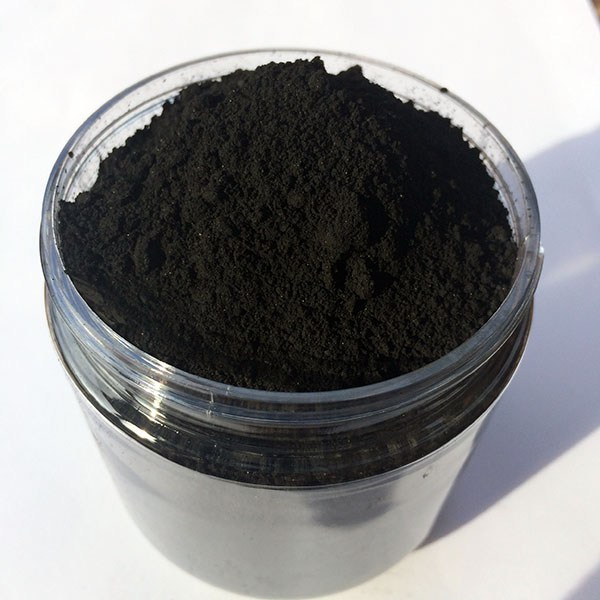
Sub-150-micron particle size and high surface area for fast adsorption. From water and air treatment to industrial processes.
Applications
Removal of pollutants, taste and odor in drinking and utility water.
Gas and waste-gas treatment, odor control in ambient air.
Decolorization, deodorization and purification processes.
Medical activated carbon used in the treatment of poisoning.
Process support as a catalyst and catalyst carrier.
The adsorption stage in gold recovery processes.
Quality & Control
Our products are tested and reported to ASTM standards in our own laboratory; no batch leaves the line until it matches the previous one.
Each year Türkiye generates 300,000–400,000 tons of hazelnut shells, most of it burned as fuel. We transform this waste into high-quality activated carbon with our process registered under Turkish Patent NO: 2012/02871 B.
Read our storyFrom the facility
We respond to messages within 2 hours.